concept · 34 questions (easy 5 · medium 18 · hard 11)
Alienation is a problematic separation between a subject and an object that belong together: estrangement from one’s work, its products, other people or oneself. Running from Rousseau, Hegel, Feuerbach and Marx to the existentialists and Rahel Jaeggi, it is central to the critique of modern life.
Marx (1844): the worker is alienated from the product, from productive activity, from other people and from human nature (species-being).
Feuerbach: God is a projection of humanity’s own qualities; Marx looks for the social causes of this.
Subjective alienation (feeling estranged) and objective alienation (frustrated capacities) are different things.
Hegel sees “pure subjective” alienation in modern society, Marcuse “pure objective” alienation; existentialists treat estrangement as permanent.
Jaeggi: alienation is being unable to experience one’s actions as one’s own, a “relation of relationlessness”.
Thinkers
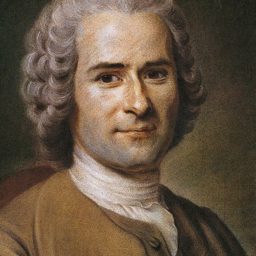
Jean-Jacques Rousseau1712–1778
Analysed the self dependent on others’ eyes, an early account of alienation.
Key work: Second Discourse (1755)
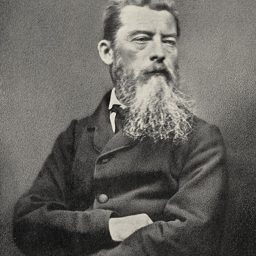
Ludwig Feuerbach1804–1872
Read God as a projection of humanity’s own qualities.
Key work: The Essence of Christianity (1841)
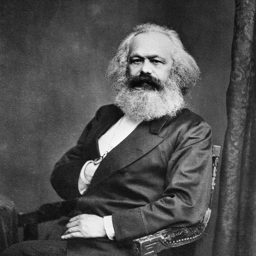
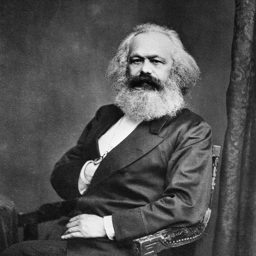
Karl Marx1818–1883
Analysed the fourfold alienation of labour under capitalism.
Key work: Economic and Philosophic Manuscripts of 1844
Rahel Jaeggi1967–
Redefined alienation without essentialism, as a disturbance of appropriation.
Key work: Alienation (2005; Eng. 2014)
Key concepts
alienation
Problematic separation of a subject and object that properly belong together.
species-being
For Marx: the human capacity for free, conscious, creative activity in community.
fetishism
Human creations escaping control and coming to rule their creators.
objectification
For Marx: productive activity that shapes nature and expresses human powers; not alienation in itself.
subjective alienation
Alienation defined by how people feel: estranged, not “at home”.
objective alienation
Frustration of essential human capacities, whatever people feel.
appropriation
For Jaeggi: being able to experience one’s actions and projects as one’s own.
authenticity
In existentialism: facing the world as other rather than mistaking it for a home.
amour-propre
For Rousseau: self-love that depends on others’ esteem; alienating when inflamed.
Questions and explained answers
There are 34 questions on this topic; 10 examples with explanations are shown here. Take the quiz for all of them.
Easy
What is the core idea of alienation?
Any feeling of sadness
Living in a foreign country
A problematic separation between a subject and an object that belong together
The legal sale of property
Show answer and explanation
Correct answer: C) A problematic separation between a subject and an object that belong together
Alienation has three elements: a subject, an object (a thing, another person, or oneself) and a separation that is problematic because the two properly belong together.
Source: Leopold, D. (2018/2022). “Alienation.” In E. N. Zalta & U. Nodelman (eds.), Stanford Encyclopedia of Philosophy. First published 30 August 2018; substantive revision 6 October 2022. ↗
Which German word, built on fremd (“alien”), is the usual term for alienation?
Aufhebung
Entfremdung
Verdinglichung
Sittlichkeit
Show answer and explanation
Correct answer: B) Entfremdung
Entfremdung means estrangement. Hegel typically used Entäusserung for the transfer of property; Verdinglichung is reification and Aufhebung is sublation.
Source: Leopold, D. (2018/2022). “Alienation.” In E. N. Zalta & U. Nodelman (eds.), Stanford Encyclopedia of Philosophy. First published 30 August 2018; substantive revision 6 October 2022. ↗
Which of the following is NOT one of the four aspects of alienated labour in Marx’s 1844 Manuscripts?
Alienation from the product
Alienation from productive activity
Alienation from other people
Alienation from human nature (species-being)
Alienation from God
Show answer and explanation
Correct answer: E) Alienation from God
Marx’s four aspects are the product, the activity, other people and human nature. Estrangement from God is the old theological sense; Feuerbach reinterpreted religion itself as a form of alienation.
Source: Leopold, D. (2003/2025). “Karl Marx.” In E. N. Zalta & U. Nodelman (eds.), Stanford Encyclopedia of Philosophy. First published 26 August 2003; substantive revision 27 March 2025. ↗
Which image does Hegel use for the opposite of alienation?
Climbing a mountain
A journey to the sea
Being “at home” in the world
A locked room
Show answer and explanation
Correct answer: C) Being “at home” in the world
Being “at home” (zu Hause) means recognizing the social world as one’s own. The image runs through later discussions of alienation.
Source: Leopold, D. (2018/2022). “Alienation.” In E. N. Zalta & U. Nodelman (eds.), Stanford Encyclopedia of Philosophy. First published 30 August 2018; substantive revision 6 October 2022. ↗
Medium
True or False: A person who is completely absorbed in and dependent on their family is, for that reason, alienated from it.
True
False
Show answer and explanation
Correct answer: B) False
False. Such over-integration may be unhealthy, but it is not alienation, which always involves separation from something. Not every bad relation is alienation.
Source: Leopold, D. (2018/2022). “Alienation.” In E. N. Zalta & U. Nodelman (eds.), Stanford Encyclopedia of Philosophy. First published 30 August 2018; substantive revision 6 October 2022. ↗
What does alienation from the product mean for Marx?
Workers dislike the design of what they make
Workers make things they neither own nor control, which come to dominate them
Products are of poor quality
Workers consume too much
Show answer and explanation
Correct answer: B) Workers make things they neither own nor control, which come to dominate them
The product belongs to the capitalist; as capital, the workers’ own past labour confronts them as an alien power.
Source: Leopold, D. (2003/2025). “Karl Marx.” In E. N. Zalta & U. Nodelman (eds.), Stanford Encyclopedia of Philosophy. First published 26 August 2003; substantive revision 27 March 2025. ↗
Why does alienation from human nature play a special role among Marx’s four aspects?
Because it is the only one that workers feel
Because it applies only to capitalists
Because frustrating the capacities for community and free creative work is what makes the other separations bad
Because it was added later by Engels
Show answer and explanation
Correct answer: C) Because frustrating the capacities for community and free creative work is what makes the other separations bad
Human nature supplies the benchmark: separation from product, activity and others is dysfunctional because it blocks free, conscious, communal activity.
Source: Leopold, D. (2003/2025). “Karl Marx.” In E. N. Zalta & U. Nodelman (eds.), Stanford Encyclopedia of Philosophy. First published 26 August 2003; substantive revision 27 March 2025. ↗
Hard
What was Marx’s main criticism of Feuerbach’s account of religious alienation?
That religion is not alienation at all
That Feuerbach was too materialist
That alienation can be ended by better arguments alone
That he did not explain why people fall into religious alienation, which lies in social conditions
Show answer and explanation
Correct answer: D) That he did not explain why people fall into religious alienation, which lies in social conditions
For Marx, religion is a symptom: people need illusory consolation because their real social world is unbearable. Changing that world, not only criticizing ideas, is what matters.
Source: Leopold, D. (2003/2025). “Karl Marx.” In E. N. Zalta & U. Nodelman (eds.), Stanford Encyclopedia of Philosophy. First published 26 August 2003; substantive revision 27 March 2025. ↗
Who aim at a future with neither objective nor subjective alienation?
Sartre and Camus
Marcuse and Adorno only
Hegel and Marx
Railton and Williams
Show answer and explanation
Correct answer: C) Hegel and Marx
Hegel and Marx both seek a condition in which people are at home in the world, though by different routes: changed attitudes for Hegel, changed society for Marx.
Source: Leopold, D. (2018/2022). “Alienation.” In E. N. Zalta & U. Nodelman (eds.), Stanford Encyclopedia of Philosophy. First published 30 August 2018; substantive revision 6 October 2022. ↗
In this dialectical pattern, what is gained in the alienated stage?
Nothing; it is pure loss
Individuality: freedom from being engulfed by the community
Religious faith
A return to nature
Show answer and explanation
Correct answer: B) Individuality: freedom from being engulfed by the community
Alienation always involves a loss, but it can also achieve something valuable. The gain of individuality is preserved in the third stage, as in Hegel’s aufheben (cancel, preserve, raise up).
Source: Leopold, D. (2018/2022). “Alienation.” In E. N. Zalta & U. Nodelman (eds.), Stanford Encyclopedia of Philosophy. First published 30 August 2018; substantive revision 6 October 2022. ↗