Existentialism
1840’lar–1960’lar · movement · 30 questions (easy 5 · medium 17 · hard 8)
Existentialism is the movement holding that human beings have no predetermined essence and make themselves through their choices. Running from Kierkegaard and Nietzsche to Heidegger, Sartre, Beauvoir and Camus, it explores freedom, anxiety, responsibility, authenticity and the absurd.
Take 10 questions on this topic → Quiz on all topics
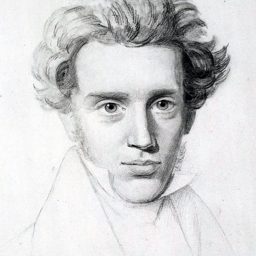
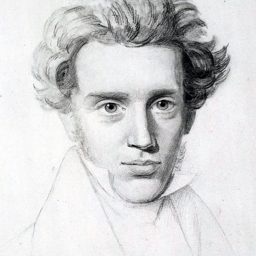
Key ideas “Existence precedes essence”: human beings first exist and only later define what they are through their actions (Sartre). Facticity (our body, past and situation) and transcendence (our power to give them meaning) together make up the human condition. Bad faith: denying one of these two sides, for example treating oneself as nothing but a role. Anxiety is directed not at an external object but at our own freedom; authenticity means taking that freedom on. Kierkegaard (the leap of faith), Heidegger (Dasein, “the They”), Beauvoir (“one is not born, but becomes, a woman”), Camus (the absurd and revolt). Thinkers Søren Kierkegaard 1813–1855 Thinker of the single individual, anxiety and faith; forerunner of existentialism.
Key work: Fear and Trembling (1843)
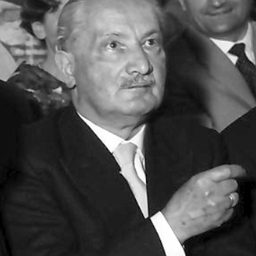
Martin Heidegger 1889–1976 Developed Dasein, being-in-the-world and authenticity.
Key work: Being and Time (1927)
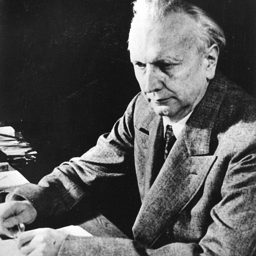
Karl Jaspers 1883–1969 Studied “limit situations” such as death, suffering and guilt.
Key work: Philosophy (1932)
Jean-Paul Sartre 1905–1980 “Existence precedes essence”; radical freedom and bad faith.
Key work: Being and Nothingness (1943)
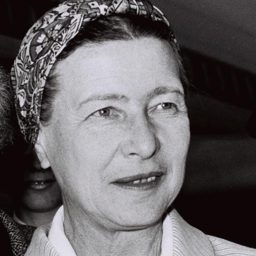
Simone de Beauvoir 1908–1986 Wrote on existentialist ethics and the social making of womanhood.
Key work: The Second Sex (1949)
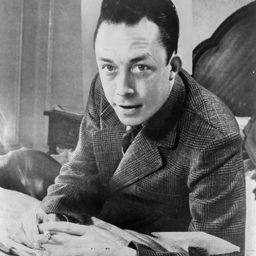
Albert Camus 1913–1960 Wrote on the absurd and revolt; did not accept the existentialist label.
Key work: The Myth of Sisyphus (1942)
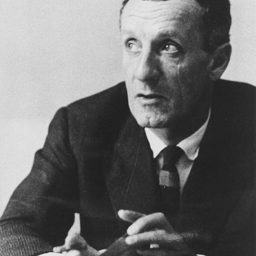
Maurice Merleau-Ponty 1908–1961 Put embodied perception at the centre of philosophy.
Key work: Phenomenology of Perception (1945)
Key concepts existence precedes essence Humans first exist and only later define what they are through their choices. bad faith For Sartre: self-deception by denying either facticity or freedom. facticity The givens we did not choose: body, past, situation. transcendence In existentialism: the power to go beyond our givens and give them meaning. Dasein For Heidegger: the self-interpreting human way of being. the They For Heidegger: the anonymous, conformist public world we drift into. anxiety Unease directed not at an object but at one’s own freedom. the absurd For Camus: the gap between our search for meaning and a silent world. leap of faith For Kierkegaard: the personal step into a faith reason cannot ground. limit situations For Jaspers: inescapable situations such as death, suffering, guilt and struggle. Questions and explained answers There are 30 questions on this topic; 10 examples with explanations are shown here. Take the quiz for all of them.
Easy Who first introduced the word “existentialism”, in 1943?
Jean-Paul Sartre Gabriel Marcel Søren Kierkegaard Martin Heidegger Show answer and explanation Correct answer: B) Gabriel Marcel
Gabriel Marcel coined it; Sartre and Beauvoir then took it up. Kierkegaard and Nietzsche, called forerunners, never used it.
Source: Aho, K. (2023). “Existentialism.” In E. N. Zalta & U. Nodelman (eds.), Stanford Encyclopedia of Philosophy. ↗
Which thinkers explicitly called themselves existentialists?
Kierkegaard and Nietzsche Heidegger and Jaspers Sartre and Beauvoir Camus and Merleau-Ponty Show answer and explanation Correct answer: C) Sartre and Beauvoir
Only Sartre and Beauvoir accepted the label. Camus explicitly rejected it.
Source: Aho, K. (2023). “Existentialism.” In E. N. Zalta & U. Nodelman (eds.), Stanford Encyclopedia of Philosophy. ↗
Which slogan is often called the unifying principle of existentialism?
I think, therefore I am Existence precedes essence God is dead The truth is the whole Show answer and explanation Correct answer: B) Existence precedes essence
Human beings have no fixed nature in advance; they become what they make of themselves. Sartre called it the first principle of existentialism.
Source: Aho, K. (2023). “Existentialism.” In E. N. Zalta & U. Nodelman (eds.), Stanford Encyclopedia of Philosophy. ↗
Which Sartre play contains the line “Hell is other people”?
The Flies No Exit (Huis clos) Dirty Hands Nausea Show answer and explanation Correct answer: B) No Exit (Huis clos)
No Exit (1944): three people trapped together torment one another with their gazes. Nausea is a novel, not a play.
Source: Aho, K. (2023). “Existentialism.” In E. N. Zalta & U. Nodelman (eds.), Stanford Encyclopedia of Philosophy. ↗
Medium In which lecture did Sartre present “existence precedes essence” to a wide audience?
Existentialism Is a Humanism (1945) Being and Time (1927) The Myth of Sisyphus (1942) Fear and Trembling (1843) Show answer and explanation Correct answer: A) Existentialism Is a Humanism (1945)
The 1945 Paris lecture, published in 1946, made existentialism a public phenomenon. Heidegger had stated a version of the idea in Being and Time.
Source: Aho, K. (2023). “Existentialism.” In E. N. Zalta & U. Nodelman (eds.), Stanford Encyclopedia of Philosophy. ↗
What is Dasein in Heidegger’s Being and Time (1927)?
A thinking substance The distinctly human way of being, a self-interpreting activity God The state Show answer and explanation Correct answer: B) The distinctly human way of being, a self-interpreting activity
Dasein (“being-there”) is not a thing with properties but an activity of understanding itself, always already in a world.
Source: Aho, K. (2023). “Existentialism.” In E. N. Zalta & U. Nodelman (eds.), Stanford Encyclopedia of Philosophy. ↗
What does Heidegger mean by das Man (“the They”)?
The ruling class The conformist public world of norms that we drift into A specific group of enemies Humanity’s future Show answer and explanation Correct answer: B) The conformist public world of norms that we drift into
We do, judge and enjoy things “as one does”. This anonymous conformity blunts our own self-determination.
Source: Aho, K. (2023). “Existentialism.” In E. N. Zalta & U. Nodelman (eds.), Stanford Encyclopedia of Philosophy. ↗
Hard In The Sickness unto Death (1849), Kierkegaard defines the self as:
A thinking substance A relation that relates itself to itself A bundle of perceptions A social role Show answer and explanation Correct answer: B) A relation that relates itself to itself
The self is not a thing but an ongoing activity of relating to oneself; despair is a misrelation in that activity.
Source: Aho, K. (2023). “Existentialism.” In E. N. Zalta & U. Nodelman (eds.), Stanford Encyclopedia of Philosophy. ↗
For Kierkegaard, the “real subject” is:
The cognitive subject of science The ethically existing subject The state Humanity in general Show answer and explanation Correct answer: B) The ethically existing subject
In the Concluding Unscientific Postscript (1846) he insists that what matters is how an individual lives, not detached knowledge.
Source: Aho, K. (2023). “Existentialism.” In E. N. Zalta & U. Nodelman (eds.), Stanford Encyclopedia of Philosophy. ↗
Heidegger distinguishes two ways of caring for others. Which is the authentic one?
“Leaping in”: taking over their responsibility “Leaping ahead”: giving them back their freedom to choose Ignoring them Ruling over them Show answer and explanation Correct answer: B) “Leaping ahead”: giving them back their freedom to choose
Leaping in can make others dependent; leaping ahead helps them face their own possibilities.
Source: Aho, K. (2023). “Existentialism.” In E. N. Zalta & U. Nodelman (eds.), Stanford Encyclopedia of Philosophy. ↗
Other thinkers and topics Descartes Kant Hegel Lukács Freud Nietzsche Foucault Comparative Frankfurt School Recognition Alienation Resonance Questions and explanations are written by voyages labs; rights to the source texts belong to their publishers.
Picture: Søren Kierkegaard (1813-1855) - (cropped).jpg · La Biblioteca Real de Dinamarca · Public domain Wikimedia Commons ↗
Picture (Søren Kierkegaard): Søren Kierkegaard (1813-1855) - (cropped).jpg · La Biblioteca Real de Dinamarca · Public domain Wikimedia Commons ↗
Picture (Martin Heidegger): Heidegger 2 (1960).jpg · Willy Pragher · CC BY-SA 3.0 Wikimedia Commons ↗
Picture (Karl Jaspers): Karl Jaspers 1946.jpg · Unknown (Mondadori Publishers) · Public domain Wikimedia Commons ↗
Picture (Jean-Paul Sartre): Jean Paul Sartre 1967.jpg · User:T1980 · CC BY 3.0 Wikimedia Commons ↗
Picture (Simone de Beauvoir): Simone de Beauvoir2.png · Moshe Milner · CC BY-SA 3.0 Wikimedia Commons ↗
Picture (Albert Camus): Albert Camus, gagnant de prix Nobel, portrait en buste, posé au bureau, faisant face à gauche, cigarette de tabagisme.jpg · Photograph by United Press International · Public domain Wikimedia Commons ↗
Picture (Maurice Merleau-Ponty): Maurice Merleau-Ponty.jpg · http://www.philosophical-investigations.org/Users/PerigGouanvic · CC BY 3.0 Wikimedia Commons ↗
Philosophy Club home · Contact / send us a message · voyages labs