1923– · movement · 35 questions (easy 8 · medium 17 · hard 10)
The Frankfurt School is the tradition of critical theory that grew around the Institute for Social Research, founded in 1923. Combining Marx, Weber and Freud, it examines domination in modern society, the culture industry and instrumental reason, running from Horkheimer and Adorno to Habermas and on to Honneth.
Critical theory does not take society as given; it reflects on its own origins and aims at emancipation (Horkheimer, 1937).
Dialectic of Enlightenment: instrumental reason that serves the domination of nature turns into domination of people; the culture industry breeds conformity.
Habermas: communicative action aims at mutual understanding; money and power invading the lifeworld is “colonization”.
Discourse ethics: only norms that all affected could accept in rational argument are valid.
Honneth: critique rests on undistorted recognition; social pathologies show up in experiences of disrespect.
Thinkers
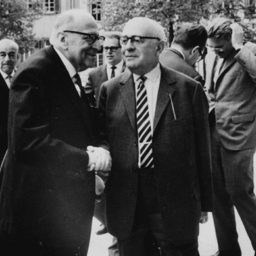
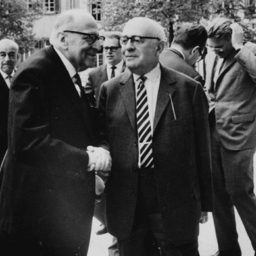
Max Horkheimer1895–1973
Director of the Institute; wrote the programme of critical theory.
Key work: Traditional and Critical Theory (1937)
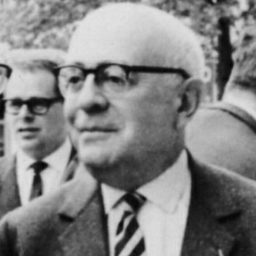
Theodor W. Adorno1903–1969
Critic of the culture industry and of identity thinking.
Key work: Negative Dialectics (1966)
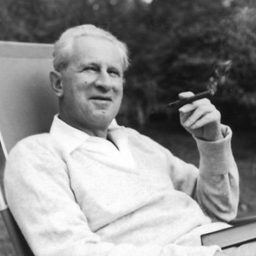
Herbert Marcuse1898–1979
Analysed how advanced industrial society absorbs opposition; influenced the 1968 student movements.
Key work: One-Dimensional Man (1964)
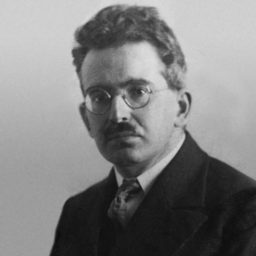
Walter Benjamin1892–1940
Known for the concept of aura and his theses on the philosophy of history.
Key work: The Work of Art in the Age of Its Technological Reproducibility (1935)
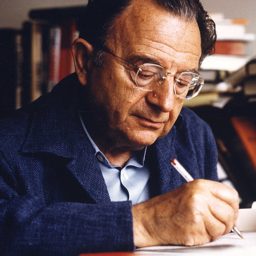
Erich Fromm1900–1980
Joined psychoanalysis with social theory; studied the authoritarian character.
Key work: Escape from Freedom (1941)
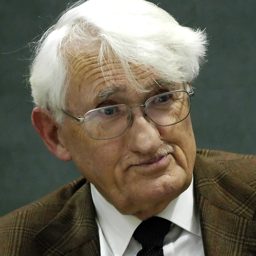
Jürgen Habermas1929–2026
Leading second-generation figure: public sphere, communicative reason, discourse ethics.
Key work: The Theory of Communicative Action (1981)
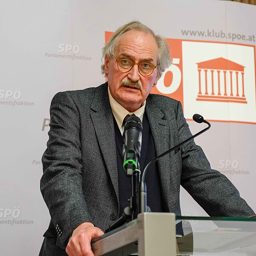
Axel Honneth1949–
Third generation; rebuilt critical theory around recognition.
Key work: The Struggle for Recognition (1992)
Key concepts
critical theory
Theory that does not take society as given, reflects on its own origins and aims at emancipation.
traditional theory
For Horkheimer: theory that accepts the existing order as given and takes itself to be value-free.
culture industry
Culture mass-produced like industrial goods: standardized and fostering conformity.
instrumental reason
Reason that only calculates efficient means and never questions ends.
immanent critique
Criticizing a society by its own professed ideals rather than external standards.
communicative action
For Habermas: action oriented toward mutual understanding rather than success.
lifeworld
Domain of everyday communication where shared meanings and identities are reproduced.
colonization of the lifeworld
Money and power (market and state) invading domains that should run on communication.
public sphere
Arena where private persons debate common matters through reasoned argument.
repressive desublimation
For Marcuse: controlled release of desire that binds individuals more tightly to the system.
Questions and explained answers
There are 35 questions on this topic; 10 examples with explanations are shown here. Take the quiz for all of them.
Easy
In which year was the Institute for Social Research founded in Frankfurt?
1931
1923
1947
1968
Show answer and explanation
Correct answer: B) 1923
The Institute was founded in 1923. Horkheimer gave his inaugural lecture as director in 1931; in 1934 the Institute moved into exile at Columbia University.
Source: Flynn, J. (2023). “Critical Theory (Frankfurt School).” In E. N. Zalta & U. Nodelman (eds.), Stanford Encyclopedia of Philosophy. First published 12 December 2023. ↗
Which thinker is NOT usually counted among the first generation of the Frankfurt School?
Max Horkheimer
Theodor W. Adorno
Herbert Marcuse
Jürgen Habermas
Walter Benjamin
Show answer and explanation
Correct answer: D) Jürgen Habermas
Habermas is the leading figure of the second generation. Horkheimer, Adorno, Marcuse and Benjamin belong to the first; Honneth, Benhabib and Fraser are usually placed in the third.
Source: Flynn, J. (2023). “Critical Theory (Frankfurt School).” In E. N. Zalta & U. Nodelman (eds.), Stanford Encyclopedia of Philosophy. First published 12 December 2023. ↗
Who wrote the programmatic essay “Traditional and Critical Theory” (1937)?
Erich Fromm
Theodor W. Adorno
Max Horkheimer
Georg Lukács
Show answer and explanation
Correct answer: C) Max Horkheimer
Horkheimer’s 1937 essay is the founding statement of critical theory: it contrasts theory that accepts the given order with theory that aims at transforming it.
Source: Flynn, J. (2023). “Critical Theory (Frankfurt School).” In E. N. Zalta & U. Nodelman (eds.), Stanford Encyclopedia of Philosophy. First published 12 December 2023. ↗
What does the “culture industry” refer to?
Mass culture produced like industrial goods: standardized and fostering conformity
Folk culture arising spontaneously from the people
Avant-garde art that resists the market
State censorship of the arts
Show answer and explanation
Correct answer: A) Mass culture produced like industrial goods: standardized and fostering conformity
In Dialectic of Enlightenment, film, radio and popular music are made like factory products. Their sameness trains audiences in conformity rather than offering an escape from it.
Source: Flynn, J. (2023). “Critical Theory (Frankfurt School).” In E. N. Zalta & U. Nodelman (eds.), Stanford Encyclopedia of Philosophy. First published 12 December 2023. ↗
Medium
For Horkheimer, what mainly distinguishes critical theory from traditional theory?
It abandons empirical research in favour of pure philosophy
It aims at value-free prediction, like the natural sciences
It studies only the psychology of individuals
It reflects on its own social origins and aims at emancipation rather than taking the order as given
Show answer and explanation
Correct answer: D) It reflects on its own social origins and aims at emancipation rather than taking the order as given
Traditional theory treats the existing order as given. Critical theory is reflexive about its own context, unites theory and practice, and has an emancipatory interest. It is interdisciplinary and uses empirical research too.
Source: Flynn, J. (2023). “Critical Theory (Frankfurt School).” In E. N. Zalta & U. Nodelman (eds.), Stanford Encyclopedia of Philosophy. First published 12 December 2023. ↗
Which statement best captures the central thesis of Horkheimer and Adorno’s Dialectic of Enlightenment (1947)?
Enlightenment has finally freed humanity from myth
Myth and enlightenment are entwined: reason that serves the domination of nature turns into domination over people
Reason is a neutral tool, and only its misuse by individuals is the problem
Only the economic base matters; culture is irrelevant
None of the above
Show answer and explanation
Correct answer: B) Myth and enlightenment are entwined: reason that serves the domination of nature turns into domination over people
The book argues that instrumental reason, rooted in the domination of nature, turns from a promise of liberation into a means of domination. Hence myth already contains enlightenment, and enlightenment falls back into myth.
Source: Flynn, J. (2023). “Critical Theory (Frankfurt School).” In E. N. Zalta & U. Nodelman (eds.), Stanford Encyclopedia of Philosophy. First published 12 December 2023. ↗
Under Max Weber’s influence, the first generation’s focus shifted from Marx’s critique of political economy toward a critique of:
Protestant theology
Natural law
Utilitarian ethics
Language games
Instrumental reason and rationalization
Show answer and explanation
Correct answer: E) Instrumental reason and rationalization
Weber’s account of rationalization and the “iron cage” led Horkheimer and Adorno to see domination in instrumental reason itself, not only in capitalist property relations.
Source: Flynn, J. (2023). “Critical Theory (Frankfurt School).” In E. N. Zalta & U. Nodelman (eds.), Stanford Encyclopedia of Philosophy. First published 12 December 2023. ↗
Hard
Which formulation fits Habermas’s discourse principle (D)?
A norm is valid if it maximizes overall happiness
A norm is valid if a single rational subject can will it as universal law
Only norms that all those affected could accept as participants in a rational discourse are valid
A norm is valid if it has been handed down by tradition
Show answer and explanation
Correct answer: C) Only norms that all those affected could accept as participants in a rational discourse are valid
Discourse ethics makes Kant’s test dialogical: validity rests on the possible agreement of all affected in real argument. The single-subject test is Kant’s monological version, which Habermas reworks.
Source: Flynn, J. (2023). “Critical Theory (Frankfurt School).” In E. N. Zalta & U. Nodelman (eds.), Stanford Encyclopedia of Philosophy. First published 12 December 2023. ↗
In Habermas’s discourse ethics, the universalization principle (U) requires that a norm:
Be approved by a majority vote
Have consequences for everyone’s interests that all affected could accept without coercion
Maximize the total sum of happiness
Be traceable to divine command
Show answer and explanation
Correct answer: B) Have consequences for everyone’s interests that all affected could accept without coercion
(U) is the argumentation rule for moral discourse: the foreseeable effects of everyone following the norm must be acceptable to all concerned. Majority voting is a political procedure, not (U).
Source: Flynn, J. (2023). “Critical Theory (Frankfurt School).” In E. N. Zalta & U. Nodelman (eds.), Stanford Encyclopedia of Philosophy. First published 12 December 2023. ↗
In Freedom’s Right (2011), Honneth’s method of “normative reconstruction” means:
Deriving norms from pure reason before looking at society
Rebuilding institutions destroyed by war
Reconstructing the values already embodied in modern institutions and criticizing them by those values
Replacing social theory with statistics
Show answer and explanation
Correct answer: C) Reconstructing the values already embodied in modern institutions and criticizing them by those values
Honneth starts from freedom as it is already realized in the family, the market and democratic politics, and measures existing practice against it: a form of immanent critique.
Source: Flynn, J. (2023). “Critical Theory (Frankfurt School).” In E. N. Zalta & U. Nodelman (eds.), Stanford Encyclopedia of Philosophy. First published 12 December 2023. ↗