concept · 35 questions (easy 6 · medium 17 · hard 12)
Recognition is the affirmation of a person or group as valuable and entitled; its core is mutuality. Running from Fichte and Hegel to Honneth, Taylor and Fraser, the concept shows that identity depends on others and that injustice can be cultural as well as economic.
Fichte: self-consciousness awakens through another free being’s “summons”. Hegel: the master–slave relation is the dead end of one-sided recognition.
Honneth’s three forms: love → self-confidence, legal respect → self-respect, social esteem → self-esteem.
Disrespect (torture, denial of rights, denigration) damages one’s relation to oneself and fuels social struggles.
Taylor: recognition is a vital human need; misrecognition confines people to a reduced image of themselves.
Fraser: justice has two dimensions (redistribution + recognition); the standard is participatory parity.
Thinkers
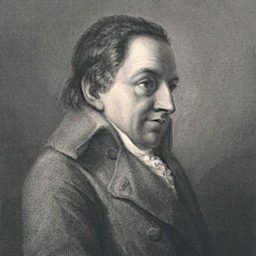
Johann Gottlieb Fichte1762–1814
Argued that self-consciousness depends on another’s “summons”.
Key work: Foundations of Natural Right (1796)
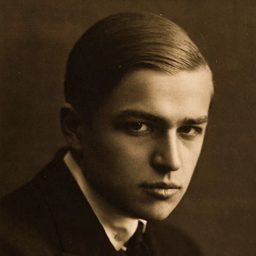
Alexandre Kojève1902–1968
Put the master–slave dialectic at the centre of French thought.
Key work: Introduction to the Reading of Hegel (1947)
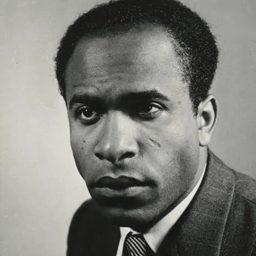
Frantz Fanon1925–1961
Applied the dialectic of recognition to colonialism and racism.
Key work: Black Skin, White Masks (1952)
Charles Taylor1931–
Defended recognition as a vital human need; multiculturalism debate.
Key work: The Politics of Recognition (1992)
Nancy Fraser1947–
Two-dimensional theory of justice joining redistribution and recognition.
Key work: Justice Interruptus (1996)
Key concepts
recognition
Affirming a person or group as valuable and entitled; its core is mutuality.
disrespect
For Honneth: denial of recognition (humiliation, denial of rights, exclusion).
misrecognition
Recognition that confines a person to a reduced or distorted image.
participatory parity
For Fraser: everyone able to take part in social life as peers; the measure of justice.
self-respect
For Honneth: the relation-to-self that comes from being recognized as a bearer of rights.
self-esteem
For Honneth: the relation-to-self that comes from one’s contributions being valued.
Questions and explained answers
There are 35 questions on this topic; 10 examples with explanations are shown here. Take the quiz for all of them.
Easy
What lies at the core of the concept of recognition?
One-sided tolerance
Mutuality
Market exchange
Obedience to authority
Show answer and explanation
Correct answer: B) Mutuality
Recognition is mutual: I can be properly recognized only by someone I in turn recognize. It also involves a positive evaluation and has both normative and psychological sides.
Source: Iser, M. (2013/2026). “Recognition.” In E. N. Zalta & U. Nodelman (eds.), Stanford Encyclopedia of Philosophy. First published 23 August 2013; substantive revision 27 July 2026. ↗
What are Honneth’s three forms of recognition?
Family, civil society, state
Faith, hope, charity
Love, legal respect, social esteem
Liberty, equality, fraternity
Show answer and explanation
Correct answer: C) Love, legal respect, social esteem
Honneth distinguishes love (close relationships), respect (equal rights) and esteem (valued contributions). “Family, civil society, state” is the institutional order of Hegel’s Philosophy of Right, which Honneth draws on.
Source: Iser, M. (2013/2026). “Recognition.” In E. N. Zalta & U. Nodelman (eds.), Stanford Encyclopedia of Philosophy. First published 23 August 2013; substantive revision 27 July 2026. ↗
Whose lectures on Hegel’s master–slave dialectic, published in 1947, influenced Sartre and Lacan?
Alexandre Kojève
Louis Althusser
Frantz Fanon
Charles Taylor
Show answer and explanation
Correct answer: A) Alexandre Kojève
Kojève’s Paris lectures made the struggle for recognition central to French thought. Sartre’s Being and Nothingness (1943) and Lacan’s psychoanalysis both bear their mark.
Source: Iser, M. (2013/2026). “Recognition.” In E. N. Zalta & U. Nodelman (eds.), Stanford Encyclopedia of Philosophy. First published 23 August 2013; substantive revision 27 July 2026. ↗
Which author applied Hegel’s dialectic of recognition to colonial racism in Black Skin, White Masks (1952)?
Louis Althusser
Judith Butler
Frantz Fanon
George Herbert Mead
Show answer and explanation
Correct answer: C) Frantz Fanon
Fanon argues that the colonized are denied reciprocal recognition: the colonizer wants work, not recognition. Mead (1934) gave the social-psychological account of the self that Honneth later used.
Source: Iser, M. (2013/2026). “Recognition.” In E. N. Zalta & U. Nodelman (eds.), Stanford Encyclopedia of Philosophy. First published 23 August 2013; substantive revision 27 July 2026. ↗
Medium
Which matching of recognition and relation-to-self is correct for Honneth?
Love → self-respect; rights → self-esteem; esteem → self-confidence
Love → self-esteem; rights → self-confidence; esteem → self-respect
Love → self-confidence; rights → self-esteem; esteem → self-respect
Love → self-confidence; rights → self-respect; esteem → self-esteem
Show answer and explanation
Correct answer: D) Love → self-confidence; rights → self-respect; esteem → self-esteem
Being loved gives basic self-confidence; being a bearer of equal rights gives self-respect; having one’s contributions valued gives self-esteem.
Source: Iser, M. (2013/2026). “Recognition.” In E. N. Zalta & U. Nodelman (eds.), Stanford Encyclopedia of Philosophy. First published 23 August 2013; substantive revision 27 July 2026. ↗
In Foundations of Natural Right (1796), what is Fichte’s contribution to the theory of recognition?
A person becomes aware of their freedom only when another “summons” them to act freely, which requires reciprocity
Recognition is a struggle to the death between two consciousnesses
Recognition is a primary good distributed by just institutions
Ideology recognizes individuals by “hailing” them as subjects
Show answer and explanation
Correct answer: A) A person becomes aware of their freedom only when another “summons” them to act freely, which requires reciprocity
Fichte’s “summons” makes self-consciousness depend on another free being, and that dependence is reciprocal. The life-and-death struggle is Hegel’s, primary goods are Rawls’s, and ideological “hailing” is Althusser’s.
Source: Iser, M. (2013/2026). “Recognition.” In E. N. Zalta & U. Nodelman (eds.), Stanford Encyclopedia of Philosophy. First published 23 August 2013; substantive revision 27 July 2026. ↗
In his Jena period, Hegel reinterpreted whose account of the state of nature as a “struggle for recognition”?
Locke
Kant
Rousseau
Hobbes
Show answer and explanation
Correct answer: D) Hobbes
Hegel turns Hobbes’s war of all against all around: people fight not only for self-preservation but to be recognized. Rousseau’s Second Discourse is another root of the theme, but the Jena reworking targets Hobbes.
Source: Iser, M. (2013/2026). “Recognition.” In E. N. Zalta & U. Nodelman (eds.), Stanford Encyclopedia of Philosophy. First published 23 August 2013; substantive revision 27 July 2026. ↗
Hard
According to Potamias, how does Lukács’s concept of reification parallel the master–slave dialectic?
As the master depends on the slave, the capitalist depends on consumers
Reification is the master’s fear of death
As the slave internalizes the master’s ends, workers internalize capital’s ends and come to see themselves as things
Reification ends as soon as workers understand that they produce the world
Show answer and explanation
Correct answer: C) As the slave internalizes the master’s ends, workers internalize capital’s ends and come to see themselves as things
Under Taylorist and Fordist production, workers adopt capital’s purposes as their own, as the slave adopts the master’s. Insight alone does not end this; de-reification requires practice that begins in production.
Source: Potamias, S. (2024). “The Hegelian Master–Slave Dialectic in History and Class Consciousness.” Open Philosophy 7(1), 20240012. DOI: 10.1515/opphil-2024-0012 (CC BY 4.0). ↗
Robert Brandom reads Hegelian recognition mainly as:
A psychological need for affection
A normative attitude: taking others as bearers of authority and responsibility, which institutes norms
A struggle over economic goods
A legal procedure between states
Show answer and explanation
Correct answer: B) A normative attitude: taking others as bearers of authority and responsibility, which institutes norms
For Brandom, normative statuses such as being committed or entitled exist only through mutual recognitive attitudes. This is a theory of norms, not of emotional needs.
Source: Iser, M. (2013/2026). “Recognition.” In E. N. Zalta & U. Nodelman (eds.), Stanford Encyclopedia of Philosophy. First published 23 August 2013; substantive revision 27 July 2026. ↗
According to Potamias, the bourgeois consumer attitude resembles the master’s because it is:
Static and anti-dialectical: it enjoys products without the formative experience of labour
Revolutionary and self-transforming
Based on manual labour
Indifferent to products
Show answer and explanation
Correct answer: A) Static and anti-dialectical: it enjoys products without the formative experience of labour
Like Hegel’s master, who only consumes what the slave works on, the bourgeois relates to the world as a consumer and so cannot develop. Development lies with those who labour.
Source: Potamias, S. (2024). “The Hegelian Master–Slave Dialectic in History and Class Consciousness.” Open Philosophy 7(1), 20240012. DOI: 10.1515/opphil-2024-0012 (CC BY 4.0). ↗