voyages labs🦉 Philosophy Club Türkçe
Lukács

Lukács

1885–1971 · thinker · 31 questions (easy 13 · medium 8 · hard 10)

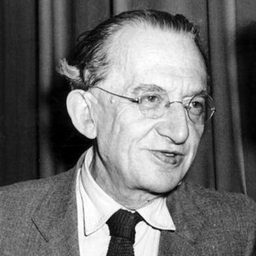
György Lukács was a Hungarian Marxist philosopher and literary theorist. In History and Class Consciousness (1923) he develops the concept of “reification”: under capitalism, relations between people appear as relations between things. With The Theory of the Novel (1916) he also left a deep mark on literary criticism.

Take 10 questions on this topic →Quiz on all topics

Key ideas

Key concepts

reification
Human-made relations appearing as natural, independent things.
commodity fetishism
Relations between people appearing as relations between things (commodities).
class consciousness
Awareness of a class’s historical position in society.
totality
The standpoint that grasps society as a historical whole.
subject–object
A subject that both makes history and is its product.
false consciousness
Consciousness that sees social reality in a distorted way.
ideology
Thought that distorts reality in a class’s interest.
imputed
Class consciousness ascribed to a position rather than held by real people.
objective possibility
Weber’s concept: what people would think if they fully grasped their situation.
proletariat
The working class that lives by selling its labour.
estate consciousness
Pre-capitalist social awareness based on legal privilege.

Questions and explained answers

There are 31 questions on this topic; 10 examples with explanations are shown here. Take the quiz for all of them.

Easy

  1. What was the “crisis of the cultural sciences”?
    1. A lack of funding
    2. If all opinion results from external psychological, social and historical causes, these sciences undermine their own truth claims
    3. Natural science replaced them
    4. They became too philosophical
    Show answer and explanation

    Correct answer: B) If all opinion results from external psychological, social and historical causes, these sciences undermine their own truth claims

    Their reductionism is self-undermining. Marx faced the same problem: if ideology distorts everyone’s view, how did he escape it? Marxism needed a theory of consciousness that is not reductionist.

    Source: Connerton, P. (1974). “The Collective Historical Subject: Reflections on Lukács’ History and Class Consciousness.” The British Journal of Sociology, 25(2), 162–178. ↗

  2. How does Lukács characterize capitalist society?
    1. Actually transparent
    2. Potentially transparent but actually opaque
    3. Neither transparent nor opaque
    4. Actually transparent but potentially opaque
    Show answer and explanation

    Correct answer: B) Potentially transparent but actually opaque

    It is the first society in history that could be understood as a whole, yet in practice it hides its own structure. Both features come from the same fact: universal commodity production.

    Source: Connerton, P. (1974). “The Collective Historical Subject: Reflections on Lukács’ History and Class Consciousness.” The British Journal of Sociology, 25(2), 162–178. ↗

  3. What makes capitalist society potentially transparent?
    1. A free press
    2. Economic life dominates society; everything is translated into the universal language of money, and class interests appear in naked clarity
    3. Democratic institutions
    4. Religion
    Show answer and explanation

    Correct answer: B) Economic life dominates society; everything is translated into the universal language of money, and class interests appear in naked clarity

    Once the commodity problem is grasped, a coherent picture of the whole comes into focus for the first time. Historical materialism is the self-knowledge of precisely this society.

    Source: Connerton, P. (1974). “The Collective Historical Subject: Reflections on Lukács’ History and Class Consciousness.” The British Journal of Sociology, 25(2), 162–178. ↗

  4. What makes capitalist society actually opaque?
    1. Censorship
    2. Anarchic commodity production, in which relations between people appear as relations between things (commodity fetishism)
    3. Too much central planning
    4. Illiteracy
    Show answer and explanation

    Correct answer: B) Anarchic commodity production, in which relations between people appear as relations between things (commodity fetishism)

    “A pair of shoes costs five pounds” hides a network of relations between breeder, farmer, workers, dealer and consumer who do not know each other. Lukács says the chapter on commodity fetishism contains the whole of historical materialism.

    Source: Connerton, P. (1974). “The Collective Historical Subject: Reflections on Lukács’ History and Class Consciousness.” The British Journal of Sociology, 25(2), 162–178. ↗

Medium

  1. Why is History and Class Consciousness (1923) important, according to Connerton?
    1. For its literary criticism
    2. It was the first major attempt to expose the epistemological background of Marx’s theory, teaching the century to read Marx through Hegel rather than Engels
    3. It defended Soviet orthodoxy
    4. It founded psychoanalysis
    Show answer and explanation

    Correct answer: B) It was the first major attempt to expose the epistemological background of Marx’s theory, teaching the century to read Marx through Hegel rather than Engels

    Its influence was reinforced by the 1932 publication of Marx’s Economic-Philosophical Manuscripts. Lukács’s later literary writings are judged weaker, shaped by survival under the Soviet regime.

    Source: Connerton, P. (1974). “The Collective Historical Subject: Reflections on Lukács’ History and Class Consciousness.” The British Journal of Sociology, 25(2), 162–178. ↗

  2. Why can pre-capitalist societies not become aware of the economic nature of their social relations?
    1. Because people were ignorant
    2. Because society was not yet structured essentially economically; economic and legal categories were interwoven, and estate consciousness blocked class consciousness
    3. Because money did not exist
    4. Because they were fully transparent
    Show answer and explanation

    Correct answer: B) Because society was not yet structured essentially economically; economic and legal categories were interwoven, and estate consciousness blocked class consciousness

    It would be misleading to say they “ignored” an economic base that was already there. The whole they could conceive was a legal totality, a network of privileges.

    Source: Connerton, P. (1974). “The Collective Historical Subject: Reflections on Lukács’ History and Class Consciousness.” The British Journal of Sociology, 25(2), 162–178. ↗

  3. For Lukács, what is the decisive difference between Marxism and bourgeois thought?
    1. The primacy of economic motives
    2. The point of view of totality
    3. Empiricism
    4. Individualism
    Show answer and explanation

    Correct answer: B) The point of view of totality

    A is the common assumption Lukács explicitly rejects. No isolated phenomenon can be understood unless it is related to the historical whole; false dualisms (fact/value, necessity/freedom, subject/object) arise when totality is missing.

    Source: Connerton, P. (1974). “The Collective Historical Subject: Reflections on Lukács’ History and Class Consciousness.” The British Journal of Sociology, 25(2), 162–178. ↗

  4. How does Connerton describe Lukács’s later writings on aesthetics and literature?
    1. As his greatest achievement
    2. As a return to Kant
    3. As purely economic analysis
    4. As a brilliant mind forced into playing Polonius to survive under the Soviet regime
    Show answer and explanation

    Correct answer: D) As a brilliant mind forced into playing Polonius to survive under the Soviet regime

    Despite their range, they too often mix perception and banality in a struggle for survival. Lukács’s claim to greatness rests on the 1923 essays.

    Source: Connerton, P. (1974). “The Collective Historical Subject: Reflections on Lukács’ History and Class Consciousness.” The British Journal of Sociology, 25(2), 162–178. ↗

Hard

  1. Which is NOT a consequence of the bourgeois view of society as governed by natural laws?
    1. A fetish of empiricism, an “exactitude complex”
    2. A fragmented academic division of labour
    3. People become passive spectators who act only technically or ethically
    4. A clear grasp of society as a historical totality
    Show answer and explanation

    Correct answer: D) A clear grasp of society as a historical totality

    The bourgeois view is precisely unable to see the totality. Even critics like Ruskin, Carlyle or Simmel see only symptoms. Technology changes the environment within unchangeable laws; ethics retreats into inwardness; neither transforms society.

    Source: Connerton, P. (1974). “The Collective Historical Subject: Reflections on Lukács’ History and Class Consciousness.” The British Journal of Sociology, 25(2), 162–178. ↗

  2. Which is NOT one of the “fictitious subjects” of bourgeois philosophy listed by Lukács?
    1. Kant’s transcendental subject
    2. Fichte’s absolute ego
    3. Hegel’s Absolute Spirit
    4. The proletariat
    Show answer and explanation

    Correct answer: D) The proletariat

    Bourgeois philosophy identifies what can be known with what can be made, but cannot find a concrete subject, so it invents fictions (also Schiller’s aesthetic ego). For Lukács the proletariat is the real subject created by history itself.

    Source: Connerton, P. (1974). “The Collective Historical Subject: Reflections on Lukács’ History and Class Consciousness.” The British Journal of Sociology, 25(2), 162–178. ↗